

As a supplier of PU foam sponge sheets, I often encounter various inquiries from customers. One question that frequently pops up is, "Can PU foam sponge sheets be dyed?" In this blog post, I'll delve into this topic, exploring the feasibility, methods, and considerations of dyeing PU foam sponge sheets.
Understanding PU Foam Sponge Sheets
Before we discuss dyeing, it's essential to understand what PU foam sponge sheets are. PU, or polyurethane, is a versatile polymer that can be formulated into different types of foam with varying densities, hardness, and cell structures. Our company offers a wide range of PU foam sponge sheets, including PU Foam High Density, Memory Foam Sponge, and Ortholite Foam. These foam sheets have numerous applications, such as in furniture, automotive interiors, packaging, and footwear.
The Feasibility of Dyeing PU Foam Sponge Sheets
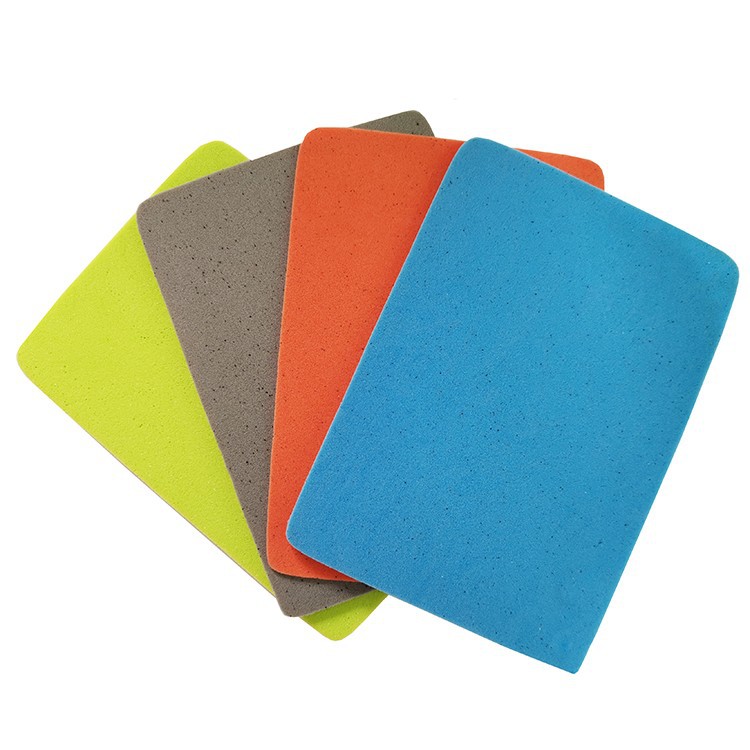
The short answer is yes, PU foam sponge sheets can be dyed. However, several factors need to be considered to ensure successful dyeing.
Chemical Composition of PU Foam
PU foam is generally resistant to many chemicals, which can make dyeing a bit challenging. The type of PU foam, whether it's open - cell or closed - cell, also affects the dyeing process. Open - cell foams tend to absorb dyes more easily because the cells are interconnected, allowing the dye to penetrate deeper into the foam structure. Closed - cell foams, on the other hand, have a more difficult time absorbing dyes due to their isolated cells.
Dye Compatibility
Not all dyes are suitable for PU foam. Water - based dyes are often preferred because they are less likely to damage the foam structure compared to solvent - based dyes. Additionally, the dye should have good affinity for the PU material to ensure even color distribution and long - lasting colorfastness.
Methods of Dyeing PU Foam Sponge Sheets
There are several methods available for dyeing PU foam sponge sheets, each with its own advantages and limitations.
Immersion Dyeing
Immersion dyeing is one of the most common methods. In this process, the PU foam sponge sheet is fully submerged in a dye bath. The dye bath typically consists of water, dye, and sometimes additives such as surfactants to improve dye penetration. The temperature and duration of immersion are crucial factors. Higher temperatures generally increase the rate of dye absorption, but excessive heat can damage the foam. A typical immersion dyeing process might involve heating the dye bath to around 60 - 80°C and immersing the foam for 15 - 30 minutes, depending on the desired color intensity.
Spray Dyeing
Spray dyeing is a more targeted method. A dye solution is sprayed onto the surface of the PU foam sponge sheet using a spray gun. This method is suitable for creating patterns or applying color to specific areas of the foam. However, achieving an even color across the entire surface can be more challenging compared to immersion dyeing. The spray pressure, nozzle type, and the distance between the spray gun and the foam surface all need to be carefully controlled.
Padding Dyeing
Padding dyeing involves passing the PU foam sponge sheet through a dye - impregnated padder. The padder squeezes the foam, forcing the dye solution into the cells. This method is efficient for large - scale production as it allows for continuous dyeing. However, it requires precise control of the dye concentration in the padder bath and the pressure applied by the padder rollers.
Considerations for Dyeing PU Foam Sponge Sheets
Colorfastness
Colorfastness is a critical consideration when dyeing PU foam sponge sheets. The dyed foam should retain its color over time, even when exposed to factors such as sunlight, moisture, and friction. To improve colorfastness, post - dyeing treatments such as heat setting or the application of fixatives may be necessary.

Physical Properties of the Foam
Dyeing can potentially affect the physical properties of the PU foam sponge sheet. For example, excessive dyeing or the use of harsh dyes can reduce the foam's elasticity, compression strength, or breathability. It's important to conduct tests on sample pieces before full - scale dyeing to ensure that the foam's performance is not compromised.
Environmental Impact
The choice of dyes and dyeing methods can have an environmental impact. Water - based dyes are generally more environmentally friendly than solvent - based dyes. Additionally, proper wastewater treatment is essential to minimize the release of pollutants into the environment.
Our Experience as a Supplier
As a supplier of PU foam sponge sheets, we have extensive experience in dyeing. We work closely with our customers to understand their specific color requirements and ensure that the dyeing process meets their quality standards. Our in - house laboratory conducts regular tests on dyed foam samples to monitor colorfastness, physical properties, and environmental compliance.
We offer customized dyeing services for our PU Foam High Density, Memory Foam Sponge, and Ortholite Foam products. Whether you need a single color for a large - scale project or a variety of colors for a custom - designed product, we can provide solutions that meet your needs.
Conclusion
In conclusion, PU foam sponge sheets can indeed be dyed, but it requires careful consideration of various factors such as the foam's chemical composition, dye compatibility, and the choice of dyeing method. As a supplier, we are committed to providing high - quality dyed PU foam sponge sheets that meet the diverse needs of our customers.
If you are interested in our PU foam sponge sheets or our dyeing services, we invite you to contact us for further discussion. We are ready to work with you to find the best solutions for your specific applications.
References
- "Polyurethane Foams: Science and Technology" by D. Randall and S. Lee.
- "Textile Dyeing and Finishing" by A. Vigo.